Can You Paint Over a Popcorn Ceiling Instead of Removing It?
Home / Blog
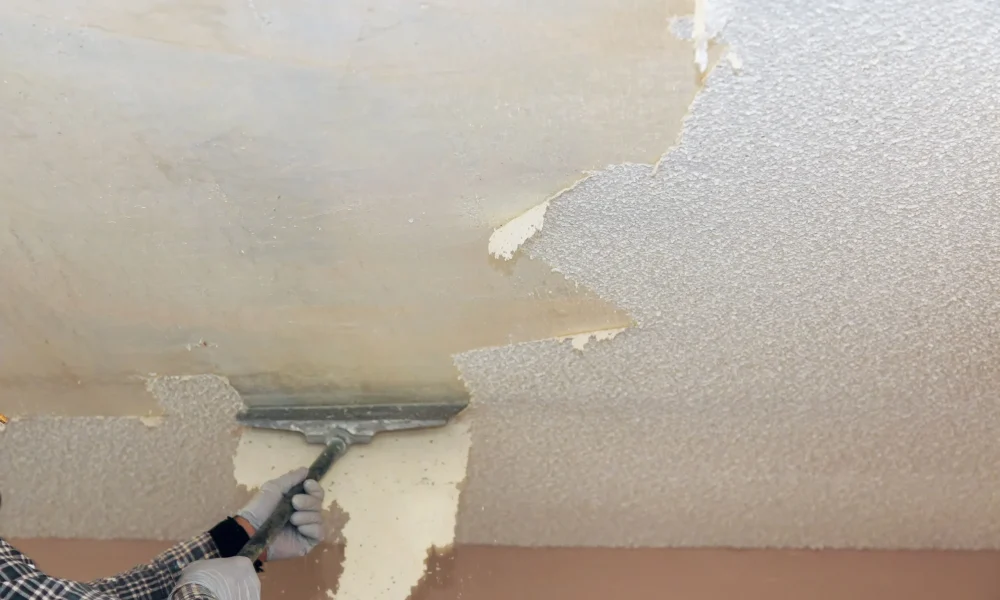
It’s one of the most common questions homeowners ask when they’re staring up at a dated popcorn ceiling: does it have to come down, or can it just be painted? Removal is messy, time-consuming, and — in homes built before 1980 — potentially involves asbestos testing and professional abatement. Painting sounds like the simpler path.
The honest answer is that painting over a popcorn ceiling is possible, but it comes with real limitations, specific conditions that determine whether it’ll work, and a few situations where it will make the problem worse rather than better. Understanding those conditions before picking up a roller is what separates a successful paint project from one that creates new headaches.
When Painting Over Popcorn Is a Reasonable Option
Painting a popcorn ceiling can be a legitimate choice when the texture is in good structural condition, the ceiling hasn’t been previously painted with a heavy coat that’s already weighing down the texture, and the goal is simply a color refresh rather than a smooth, contemporary look.
Specifically, painting works reasonably well when the texture is still firmly adhered to the drywall or plaster substrate — no areas that are soft, sagging, or showing water damage — and when the existing texture is dry and clean. In this condition, a carefully applied coat of paint can brighten a dingy ceiling, update a yellowed or smoke-stained surface, and extend the life of a texture that isn’t yet causing problems.
It’s also worth noting that painting doesn’t close the door on removal later. A popcorn ceiling that has been painted once can still be scraped, though it requires more effort than an unpainted one. Painting now and removing in a future renovation is a reasonable staged approach for homeowners who want a quick update without committing to the full removal process right now.
The Core Problem: Paint Adds Weight to a Fragile Surface
Popcorn texture — also called acoustic texture or cottage cheese ceiling — is applied as a spray-on mixture that adheres to the substrate and dries in a loose, porous structure. That structure is not particularly robust. The texture holds together and stays on the ceiling as long as it stays dry and isn’t subjected to mechanical stress or significant added weight.
Paint adds weight. Each coat of paint applied to a popcorn ceiling saturates the porous texture material and increases the mass that the original adhesion bond has to support. A single careful coat on an otherwise sound ceiling is usually manageable. But a ceiling that has already been painted once or twice, or that has absorbed moisture at any point, may not support another coat without chunks of texture separating from the substrate and falling.
This is the failure mode most homeowners don’t anticipate: the painting goes on smoothly, but as it dries and the added weight sets in, sections of texture begin to detach — sometimes in small patches, sometimes in larger areas. The result is a ceiling that looks worse than before painting and now needs repair before anything else can be done.
What to Check Before Deciding to Paint
A few simple checks before committing to paint over a popcorn ceiling can tell you whether the project is likely to go smoothly or not.
Test adhesion in an inconspicuous area. Lightly wet a small section of the ceiling texture with a damp sponge or spray bottle and wait a few minutes. If the texture softens and begins to release from the substrate, the adhesion is marginal — adding a wet coat of paint is likely to cause the same release across a larger area. If the texture stays firm after wetting, adhesion is likely sound enough to proceed.
Look for prior paint coats. Run a flashlight across the ceiling at a low angle. Prior paint coats tend to fill in the gaps between texture peaks and create a smoother, shinier appearance compared to raw, unpainted texture. If the ceiling has already been painted once or twice, adding another coat significantly increases the risk of texture detachment.
Check for water staining or damage. Water-damaged popcorn texture loses its adhesion even after drying. Any area that shows brown water staining, soft spots, or texture that moves when pressed lightly is a sign that moisture has compromised the bond. Painting over water-damaged texture will not hold — the damaged sections need to be removed and repaired first regardless of whether the rest of the ceiling gets painted or removed.
Know when the home was built. Homes built before 1980 may have popcorn texture that contains asbestos, which was a common additive in texture products during that era. If the home predates 1980 and the texture hasn’t been tested, it should be tested before any work that disturbs it — including painting that might cause texture to detach. This applies equally to painting and removal.
How to Paint a Popcorn Ceiling Without Destroying the Texture
If the ceiling passes the checks above and painting is the right choice, technique matters more here than on any other painted surface. The wrong application method is what causes most DIY popcorn ceiling paint jobs to fail.
Use a thick-nap roller. A standard short-nap roller pushes into the texture peaks and physically dislodges them as it rolls. A thick-nap roller — typically ¾ inch to 1 inch nap — rides over the texture surface and deposits paint without pressing into the peaks. This is the most important single tool decision in the project.
Apply paint lightly and don’t overwork it. The temptation when rolling a ceiling is to work the paint back and forth until it looks even. On a popcorn ceiling, every additional pass of the roller risks dislodging texture that’s already coated and softened by the wet paint. Apply with light, single-direction passes and resist the urge to go back over wet areas.
Don’t use a brush to cut in around edges first. Cutting in with a brush before rolling is standard ceiling painting practice, but on popcorn texture, a brush drags across the surface and dislodges texture at the edges where the rolled area and the brushed area meet. Use a small roller for edge areas instead, or accept a slightly less precise line at the perimeter.
Use a flat or matte paint. Popcorn texture has an inherently rough, matte surface. Applying a satin or semi-gloss paint emphasizes the texture unevenly — the peaks catch more sheen than the valleys — and the result looks patchy and inconsistent. Flat ceiling paint is the right product for this application.
One coat is usually enough. A second coat doubles the weight load on the texture and significantly increases the risk of detachment. If the first coat doesn’t achieve the desired coverage, assess whether the ceiling actually needs more paint or whether the uneven appearance is simply the nature of the texture.
When Painting Isn’t the Right Answer
There are circumstances where painting a popcorn ceiling is the wrong approach, and proceeding anyway leads to more work and expense than removal would have been in the first place.
A ceiling that has already been painted multiple times is a poor candidate for another coat. The cumulative weight of prior coats has often already stressed the adhesion bond to near its limit. Another coat frequently triggers the detachment that prior coats narrowly avoided.
A ceiling showing active water damage, sagging, or soft spots is not a painting candidate — it’s a repair candidate. Painting over structural damage conceals it without addressing it, and the concealed damage continues to progress.
A ceiling where the texture is already partially delaminating — small sections hanging loose or showing cracks along the texture surface — will not be improved by painting. The loose sections need to come down before any paint goes on, and at that point a full removal often makes more practical sense than a selective repair followed by painting.
And for homeowners who want a smooth, contemporary ceiling finish, painting is the wrong tool regardless of condition. Popcorn texture painted over still looks like popcorn texture. It may be a brighter or cleaner version, but the texture profile doesn’t change. Smooth ceiling finishes require removal.
The Case for Removal
If the checks above raise concerns, or if the goal is a genuinely updated ceiling rather than a refreshed old one, removal is worth comparing against the paint option on its actual merits rather than its reputation.
Popcorn ceiling removal on a ceiling in sound condition — not previously painted, not asbestos-containing — is a manageable project. The texture is wetted, scraped off, and the substrate is skimmed or sanded smooth before painting. The mess is real but contained, and the result is a ceiling that looks permanently updated rather than temporarily refreshed.
For pre-1980 homes or ceilings with prior paint coats, the process is more involved and professional removal is the right approach. But the cost of professional removal is often comparable to the cost of attempting to paint, failing, repairing the damage, and then removing anyway — which is the sequence that results when painting is chosen for a ceiling that wasn’t a good candidate.
Ready to Figure Out the Right Approach for Your Ceiling?
Whether painting or removal is the right answer depends on the specific condition of your ceiling — and an honest assessment of that condition is the starting point. At RM Empire Painting, we evaluate popcorn ceilings throughout Ventura, CA and give homeowners a straight answer about which approach makes sense for their situation.
Not sure whether to paint or remove? Contact RM Empire Painting for a free estimate and ceiling assessment.
Our Services
Get A Free Quotes
Got any questions ? Feel free to call us !
Do you have any questions about our services or would you like to request a free estimate? Don’t hesitate to call us at (805) 746-5140. At RM Empire Painting we are always available to provide you with personalized advice and help you transform your spaces with the quality we are known for. Contact us today, we’ll be happy to assist you!
Whether you’re looking to refresh your home or enhance your business, our team of licensed and insured professionals is here to deliver exceptional results.
Our Services
Copyright ©2026 RM Empire Painting, All rights reserved. Powered by Orbis Advisers.