Green Exterior Paint in Southern California: Which Shades Hold Up and Which Fade Fast
Home / Blog
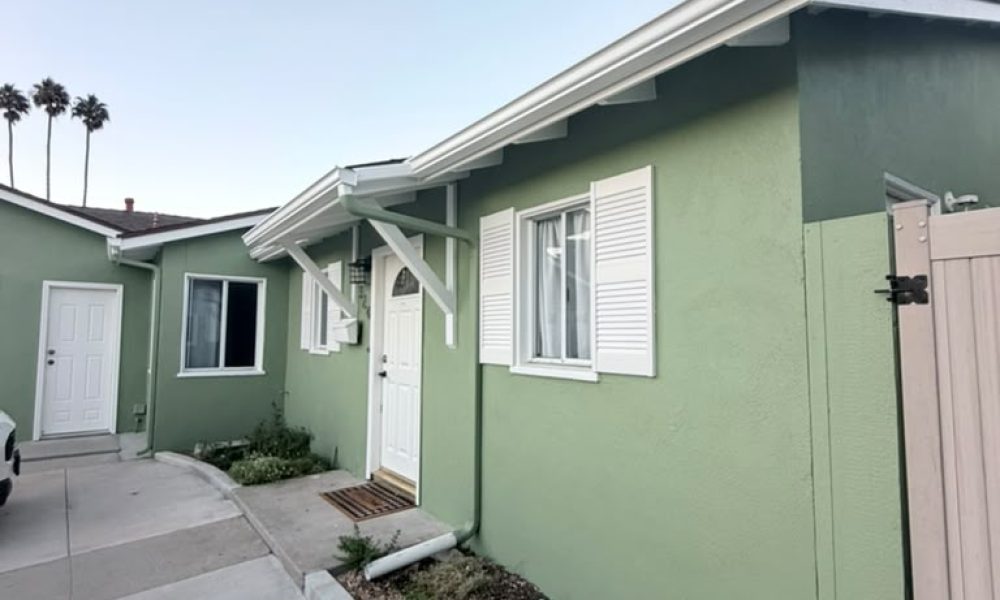
Green is one of the most requested exterior paint colors in Southern California right now — and also one of the most variable in terms of how it performs over time. A sage green that looks fresh and grounded on the day it’s painted can wash out to a tired, dusty non-color within a few years on a south-facing wall in Ventura. A deeper olive or forest green on the same wall might hold its character for a decade with the right product.
The difference isn’t just product quality, though that matters. It’s the specific pigments used to make green, how those pigments respond to UV exposure, and which part of the green spectrum a particular shade sits in. Understanding these factors before choosing a green exterior color can save a homeowner from the frustration of a fresh paint job that ages poorly in conditions they could have anticipated.
Why Green Is Particularly Vulnerable to UV Fading
All exterior paint colors fade under UV exposure over time, but green fades in a way that’s more visually disruptive than most other colors. The reason is in the pigment chemistry.
Green paint is almost always a mixture of blue and yellow pigments rather than a single green pigment. These two component pigments don’t degrade at the same rate under UV exposure — yellow pigments, in particular, are among the least UV-stable pigments used in exterior paint. As yellow pigments break down faster than blue ones, the green shifts toward the blue side of the spectrum. A warm sage or olive that read as earthy and natural starts reading as a cool, grayish blue-green that looks nothing like what was intended.
This pigment shift is different from the general lightening that happens as paint chalks and fades. It’s a hue shift — the color doesn’t just get lighter, it moves. And because the shift happens gradually over years, homeowners often don’t notice it until the difference between the current color and the original is significant enough that it’s impossible to ignore.
The rate of this shift depends on three things: the specific pigments used in the formulation, the UV inhibitor package in the paint product, and the intensity of UV exposure the surface receives. In Southern California’s coastal environment, where UV exposure is high year-round and salt air compounds the stressor load, these factors interact in ways that reward careful color and product selection.
Greens That Hold Up Well
Certain green shades have pigment compositions that are inherently more stable under UV exposure in a Southern California climate, and they consistently outperform other greens over a full paint cycle.
Muted, gray-based sages. Sage greens that have a significant gray component — often described as “dusty sage,” “weathered sage,” or “gray-sage” — are among the most durable green choices for coastal California exteriors. The gray component is typically made with carbon-based or iron oxide pigments, which are among the most UV-stable pigments available. When some of the yellow in the formulation shifts under UV, the gray component absorbs much of that visual change, so the color appears to age gracefully rather than transforming dramatically. These greens also happen to read as very compatible with the diffused light of the marine layer, which makes them popular choices in Ventura neighborhoods.
Olive and army greens. Deeper olive tones — colors that sit between green and brown, sometimes with a yellow-brown warmth — tend to use a higher proportion of iron oxide pigments, which are extremely UV-stable. When these colors fade, they lighten rather than shift hue dramatically, and a lightened olive often still reads as an intentional, coherent color rather than as a mistake. The tradeoff is that true olives can read as heavy on a home with a low roofline or in a dense neighborhood where the color dominates the facade.
Deep forest and hunter greens. Saturated, dark greens in the forest or hunter range hold their depth longer than lighter greens because there’s more pigment depth to lose before the fade becomes visually significant. A forest green that fades to a medium green over seven years still reads as green; a light sage that fades the same amount in percentage terms can become nearly unidentifiable. The limitation of dark greens is their heat absorption in direct summer sun, which is a consideration for south and west-facing walls.
Greens That Fade Poorly
Knowing which greens to avoid is as useful as knowing which ones to choose. These shades consistently underperform in Southern California’s UV and salt air environment.
Bright or lime greens. Saturated, yellow-dominant greens rely heavily on the yellow pigments that fade fastest. These shades can look dramatically different within two to three years on a south-facing wall — not just lighter, but shifted toward an indeterminate yellow-gray that reads as dirty rather than faded. Beyond their fade vulnerability, bright greens are also among the most difficult exterior colors to get permitted in HOA communities and can read as jarring against the natural landscape.
Yellow-greens and chartreuse. Similar to lime greens, these shades have such a high proportion of yellow pigment that UV degradation quickly strips away the green character and leaves a dull, chalky yellow. They also tend to look dated faster than cooler greens, compounding the visual problem.
Minty or aqua greens. These sit at the green-blue boundary and are made with a different pigment mix than warmer greens — more blue, less yellow. They can be relatively stable in terms of hue shift, but they tend to fade to a washed-out, institutional-looking pale that reads as a mistake rather than a weathered color. They’re also very sensitive to the specific light conditions of a property: minty greens can look fresh and coastal in diffused marine layer light and harshly bright in direct afternoon sun.
Pastel and very light greens. Any green with very low pigment loading — pale, watery greens that read as almost white from a distance — has so little pigment depth that UV degradation is visible quickly and prominently. These colors also show mildew and environmental dirt accumulation more clearly than deeper greens, which creates a maintenance burden in a coastal environment.
How Product Quality Affects Green Fade Resistance
Pigment selection matters, but product quality determines how well those pigments are protected over the life of the paint film.
The UV inhibitor package in a premium exterior paint product extends the life of all pigments — including the less stable yellow ones — by absorbing or reflecting UV radiation before it reaches and breaks down the pigment molecules. A premium 100% acrylic exterior paint with a robust UV inhibitor package will outperform a standard acrylic with the same color by a meaningful margin on a south-facing wall in Ventura.
The practical implication: a naturally stable green shade in a premium product is the best combination. A naturally stable shade in a budget product will still outperform an unstable shade in a premium product, because pigment stability is the foundation and UV inhibitors are the protection layer on top of it. But pairing a vulnerable shade with a budget product — no UV inhibitor package, low-quality pigments throughout — is a reliable way to end up with a disappointing result by year three.
Sheen also plays a small but real role. Flat sheens on green exteriors can amplify the visual appearance of fading because the flat surface scatters light and shows chalking more prominently. A satin sheen on green stucco or siding sheds chalk more readily and maintains the visual depth of the color longer than flat, with the tradeoff of slightly more visible surface texture variation.
Testing Green in Coastal California Light
Green is one of the colors most affected by the specific quality of coastal California light, and it’s worth taking the time to test samples before committing to a shade for the whole exterior.
The marine layer that settles over coastal Ventura most mornings creates a soft, diffused light that cools warm greens and deepens cool ones. A sage green that looks warm and earthy on a paint chip under warm indoor lighting can read as distinctly cooler and more gray-blue on the actual exterior under morning marine layer light. Conversely, a gray-sage that looks almost neutral indoors can look beautifully grounded and green in diffused outdoor light.
Midday sun in Southern California is high-intensity and relatively neutral in color temperature, which tends to show colors close to their true value. Late afternoon light is warmer and lower-angle, which can make green exteriors look more golden or olive than they read at other times of day.
Testing a large paint sample — at least 12 by 12 inches — on the actual exterior surface and observing it at multiple times of day gives a much more accurate picture of how the color will live on the home than any chip or rendering can provide. For green specifically, the morning and midday observations are the most diagnostic, because those are when the coastal light conditions most strongly influence how the color reads.
Ready to Choose a Green That Will Look Right for Years?
The right green exterior for a Southern California home is one that fits the architecture, works with the landscape, and holds its character through the UV exposure and salt air that define the coastal environment. At RM Empire Painting, we work with homeowners throughout Ventura, CA on exterior color selections that account for how color actually performs over time — not just how it looks on the day it’s applied.
Ready to find the right green for your home? Contact RM Empire Painting for a free estimate and color consultation.
Our Services
Get A Free Quotes
Got any questions ? Feel free to call us !
Do you have any questions about our services or would you like to request a free estimate? Don’t hesitate to call us at (805) 746-5140. At RM Empire Painting we are always available to provide you with personalized advice and help you transform your spaces with the quality we are known for. Contact us today, we’ll be happy to assist you!
Whether you’re looking to refresh your home or enhance your business, our team of licensed and insured professionals is here to deliver exceptional results.