Signs Your Home's Popcorn Ceiling Needs to Be Removed
Home / Blog
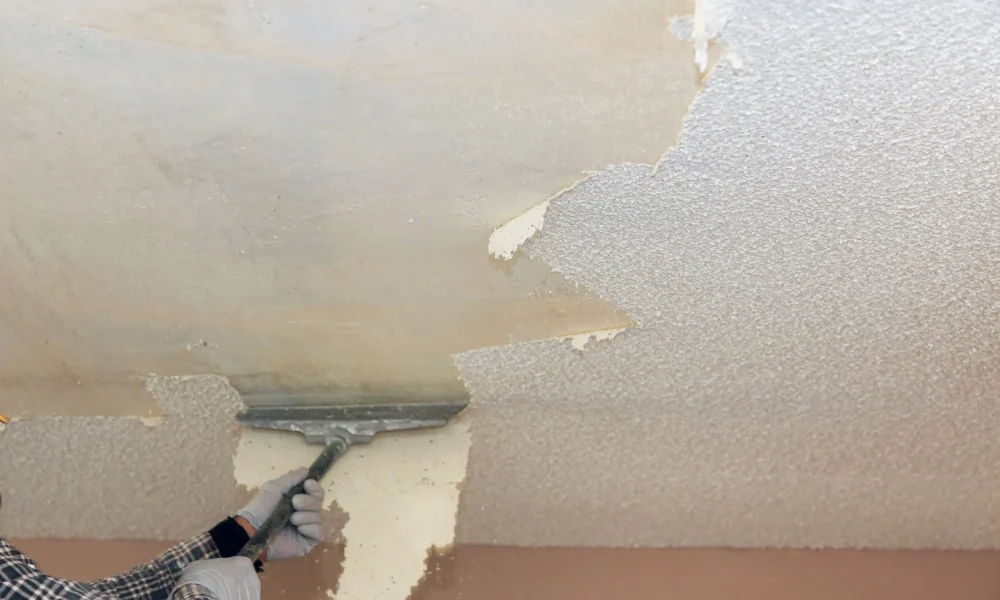
Popcorn ceilings — also known as acoustic or textured ceilings — were a staple of American home construction from the 1950s through the 1980s. They were fast to apply, inexpensive, and effective at hiding imperfections and dampening sound. Decades later, they’ve become one of the most commonly updated features in older homes, and for good reason.
Beyond the dated aesthetic, there are real functional and health-related reasons why a popcorn ceiling may have reached the end of its useful life. Knowing the signs helps you make an informed decision about whether removal makes sense for your home in Ventura, CA — and how urgently it needs to happen.
1. Visible Water Stains or Moisture Damage
Water stains are one of the most telling signs that a popcorn ceiling needs attention. Because the textured surface is highly porous, it absorbs moisture readily and holds it — which means even a minor roof leak or bathroom condensation issue can leave behind staining that’s extremely difficult to paint over cleanly.
More importantly, moisture trapped in a textured ceiling creates ideal conditions for mold and mildew growth hidden within the texture itself, where it’s difficult to detect and harder to treat. If you’re seeing yellowing, brown rings, or soft spots in your popcorn ceiling, removal is typically the most thorough and lasting solution.
2. The Texture Is Cracking, Flaking, or Falling
Popcorn texture that was applied decades ago doesn’t bond to the ceiling substrate the same way modern coatings do. Over time — especially in homes with temperature fluctuations, settling, or vibration — the texture can begin to crack, separate, and flake off in chunks.
Beyond the mess, flaking texture is a warning sign that the adhesion has failed across a wider area than what’s visibly falling. Spot repairs rarely hold long-term on a ceiling where the underlying bond has degraded. At that stage, full removal and resurfacing is the more cost-effective path.
3. Your Home Was Built Before 1980
This sign isn’t about how the ceiling looks — it’s about what may be inside it. Popcorn texture applied before 1980 frequently contained asbestos, which was added as a fire retardant and was widely used in building materials before its health risks were fully understood.
Asbestos in an undisturbed popcorn ceiling is generally considered low-risk. But a ceiling that’s cracking, flaking, or being disturbed during renovation work can release asbestos fibers into the air — a serious health concern. If your home was built before 1980 and still has its original textured ceilings, professional testing and safe removal by a licensed contractor is the appropriate step before any work begins.
4. You’re Having Trouble Selling or Staging the Home
Popcorn ceilings are consistently cited by real estate professionals as a feature that makes homes harder to sell and can affect perceived value. Buyers — particularly younger buyers — associate textured ceilings with dated interiors and often factor removal costs into their offers.
If you’re preparing to list your Ventura home or want to maximize its appeal during staging, removing popcorn ceilings is one of the higher-impact updates you can make relative to cost. Smooth ceilings make rooms feel larger, cleaner, and more modern — an immediate visual upgrade that shows well in listing photos and in person.
5. The Texture Has Been Painted Over — Multiple Times
Many homeowners have painted over popcorn ceilings rather than removing them, often multiple times over the years. Each coat of paint adds weight to the texture and changes its composition, making it progressively heavier, more prone to sagging, and harder to maintain.
Painted-over popcorn texture is also significantly more difficult to remove than unpainted texture, as the paint seals the surface and prevents the water-soaking method that makes standard removal manageable. If your popcorn ceiling has visible drips, brush marks, or has taken on a thick, lumpy appearance from layers of paint, it’s typically better to address it now than wait for the ceiling to become a bigger project.
6. You’re Renovating or Updating the Space
Popcorn ceilings don’t coexist easily with modern interior design. If you’re updating a room with new flooring, fresh wall colors, updated lighting, or new trim, a textured ceiling from the 1970s will visually undercut the rest of the renovation.
Ceiling removal during an active renovation also makes logistical sense — furniture is already moved, drop cloths are already down, and the disruption of the project is already accounted for. Adding ceiling removal to an existing renovation scope is almost always easier and less disruptive than scheduling it as a standalone project later.
7. You Simply Want a Cleaner, More Modern Interior
Sometimes there’s no urgent functional reason — just the recognition that the popcorn ceiling is visually holding the room back. Smooth ceilings reflect light more evenly, make spaces feel taller and more open, and provide a clean backdrop for recessed lighting and ceiling fans. In rooms where you spend significant time — living rooms, master bedrooms, home offices — the improvement in atmosphere is noticeable and lasting.
What to Do Once You’ve Decided It’s Time
If one or more of these signs apply to your home, the next steps are straightforward:
- Test for asbestos first if the home was built before 1980. A licensed professional can take a sample and have it tested before any removal begins.
- Schedule a professional assessment to evaluate the scope and condition of the ceiling before committing to a removal approach.
- Plan for the full scope — removal, ceiling repair and skim coating, priming, and painting — so you have an accurate picture of cost and timeline before work starts.
At RM Empire Painting, we handle popcorn ceiling removal for homeowners throughout Ventura, CA from start to finish — including surface prep, skim coating for a smooth finish, and a final paint coat that leaves the ceiling looking clean and modern.
Ready to say goodbye to your popcorn ceiling? Contact RM Empire Painting today for a free estimate and let our team assess what your ceilings need.
Our Services
Get A Free Quotes
Got any questions ? Feel free to call us !
Do you have any questions about our services or would you like to request a free estimate? Don’t hesitate to call us at (805) 746-5140. At RM Empire Painting we are always available to provide you with personalized advice and help you transform your spaces with the quality we are known for. Contact us today, we’ll be happy to assist you!
Whether you’re looking to refresh your home or enhance your business, our team of licensed and insured professionals is here to deliver exceptional results.
Our Services
Copyright ©2026 RM Empire Painting, All rights reserved. Powered by Orbis Advisers.