Touch-Up vs. Full Repaint: How to Know When Partial Work Won't Cut It
Home / Blog
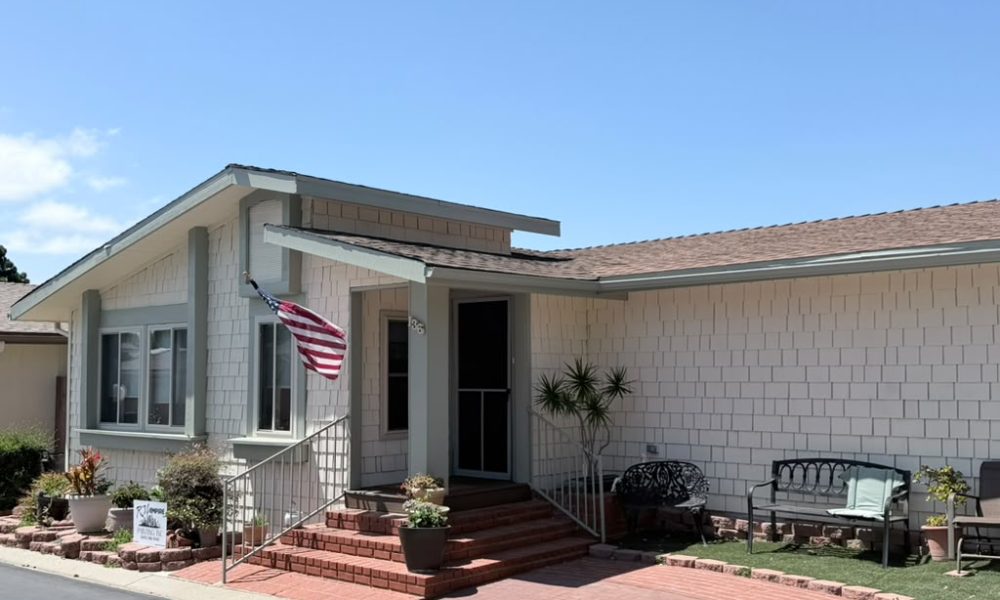
When exterior paint starts showing its age, the first instinct for most homeowners is to reach for a brush and touch up the problem areas. It’s faster, it’s less expensive upfront, and it feels like the practical choice. Sometimes it is. But just as often, touch-up work creates a new problem while leaving the original one unresolved — and in Southern California’s sun and salt air environment, the difference between a smart touch-up and a wasted effort comes down to understanding what the paint is actually telling you.
When a Touch-Up Is the Right Call
Touch-up painting makes sense when the paint failure is isolated, the existing paint is otherwise in good condition, and the color can be matched closely enough to be undetectable. The key word is isolated — a single section of wall where paint has chipped from an impact, a door frame that got dinged during a move, a small area of peeling around a window that was repaired. In these cases, the surrounding paint is still adhering well, the surface is intact, and the failure has a specific, identifiable cause that has been addressed.
For touch-ups to hold, a few conditions need to be true at once. The existing paint needs to be in sound condition — properly adhered, not chalking, not fading unevenly. The color needs to match well enough that the repair blends in rather than creating a visible patch. And the repaired area needs the same surface preparation that any paint job requires: cleaned, primed where bare substrate is exposed, and topcoated with a product compatible with the existing paint.
When all of those conditions are met, a touch-up is a legitimate maintenance strategy that extends the life of an otherwise sound paint job.
The Problem With Touch-Ups on Aging Exteriors
The difficulty is that most requests for touch-up work don’t meet those conditions — and homeowners often don’t realize it until the work is done and the result doesn’t look right.
- Color matching is harder than it looks. Exterior paint fades. In Ventura’s coastal sun, even quality exterior paints shift in color over three to five years of UV exposure. The original paint color on the can and the color currently on the wall are not the same — and the difference is often noticeable when fresh paint is applied next to it. Touch-up patches that look acceptable when wet frequently become visible as they dry and cure, particularly in raking light conditions like morning or late afternoon sun.
- Widespread chalking can’t be touched up. Chalking is the powdery residue that forms on the surface of aged paint as the binder breaks down under UV exposure. It’s a normal end-of-life signal for exterior paint, and it indicates that the paint film has degraded past the point where touch-up work is meaningful. Fresh paint applied over a chalking surface bonds to the chalk rather than to the wall — and the chalk releases, taking the new paint with it.
- When failure is systemic, isolating it is an illusion. If paint is peeling or failing in multiple locations across the exterior, those locations are symptoms of a condition that affects the entire surface — whether that’s moisture infiltration, a primer failure from a previous paint job, or paint that has simply reached the end of its service life. Patching the visible failures leaves the underlying condition in place. The patches may look fine for a season, but failure continues to develop in areas that weren’t addressed.
Signs That Point to a Full Repaint
Certain conditions make a full repaint the only option that will actually hold — not because a touch-up is impossible, but because it won’t address what’s causing the paint to fail in the first place.
- Widespread or pattern peeling. Peeling that appears across multiple wall surfaces, along the entire roofline, or in a consistent pattern around windows and doors is not isolated failure — it’s a sign that the paint bond has broken down at the substrate level across a broad area. Patching individual peeling sections while leaving the rest intact means the surrounding paint will continue to fail around the repairs.
- Significant fading or uneven color. Exterior paint that has faded unevenly — lighter on south and west-facing walls that receive more direct sun, darker on shaded north-facing walls — cannot be corrected with touch-up work. The variation in fade means there’s no single color that matches all surfaces simultaneously. A fresh coat over the entire exterior resets the color uniformly.
- Heavy chalking across most surfaces. As noted above, chalking indicates that the paint binder has broken down. When chalking is present across most of the exterior, the entire surface needs to be pressure washed, treated, and reprimed before new paint is applied. That process is essentially the prep phase of a full repaint.
- Visible cracking or alligatoring. Cracking that follows the paint film itself — rather than underlying substrate cracks — indicates that the paint has lost its flexibility and can no longer move with the substrate as it expands and contracts. This type of failure tends to be widespread even when it’s only visible in certain areas, and touch-up work on top of it will crack in the same pattern.
- Previous touch-ups that haven’t held. If touch-up patches from a prior attempt are already failing — peeling at the edges, visible as mismatched color patches, or simply not adhering — that’s a reliable indicator that the underlying surface condition isn’t suitable for touch-up work. Repeating the same approach produces the same result.
The Hidden Cost of Choosing Touch-Up When You Need a Full Repaint
Touch-up work on an exterior that actually needs a full repaint doesn’t just fail to solve the problem — it can make the eventual full repaint more difficult and expensive.
Paint that has been repeatedly touched up accumulates uneven film thickness across the surface. Areas with multiple touch-up applications have more layers than surrounding areas, which can create texture and adhesion inconsistencies that require additional preparation before a full coat can be applied. Touch-up work also tends to obscure the true condition of the underlying surface, making it harder to assess what preparation is actually needed when the full repaint is finally done.
There’s also the opportunity cost. The labor and materials spent on touch-up work that doesn’t hold represent money that could have gone toward the full repaint that was needed in the first place — and in the meantime, the exterior continues to deteriorate.
What a Professional Assessment Tells You
The most reliable way to determine whether touch-up work will hold is a professional assessment of the existing paint condition — not just the visible failure areas, but the overall paint film across the entire exterior.
A professional painter evaluates adhesion across different surfaces and orientations, looks for chalking and film degradation that isn’t obvious from the street, assesses whether the existing paint is compatible with products that would be used for touch-up work, and identifies any substrate issues — cracks, moisture damage, stucco delamination — that need to be addressed regardless of what paint approach is chosen.
In many cases, that assessment confirms that targeted touch-up work is the right call and extends the life of an otherwise sound paint job by several years. In others, it clarifies that a full repaint is the more cost-effective choice — and makes the case in terms of what the homeowner will actually see and what the work will actually cost over the next several years, not just this season.
Ready to Get an Honest Assessment of Your Exterior?
At RM Empire Painting, we give homeowners a straight answer about whether touch-up work will hold or whether a full repaint is the better investment — based on what’s actually happening with the paint, not on which job is larger. We work with homeowners throughout Ventura, CA on exterior painting projects of every scope.
Not sure where your exterior stands? Contact RM Empire Painting for a free estimate and an honest evaluation of your options.
Our Services
Get A Free Quotes
Got any questions ? Feel free to call us !
Do you have any questions about our services or would you like to request a free estimate? Don’t hesitate to call us at (805) 746-5140. At RM Empire Painting we are always available to provide you with personalized advice and help you transform your spaces with the quality we are known for. Contact us today, we’ll be happy to assist you!
Whether you’re looking to refresh your home or enhance your business, our team of licensed and insured professionals is here to deliver exceptional results.
Our Services
Copyright ©2026 RM Empire Painting, All rights reserved. Powered by Orbis Advisers.