Vinyl Fence Color and Your Home's Exterior: How to Make a Fixed Element Work With Your Paint Scheme
Home / Blog
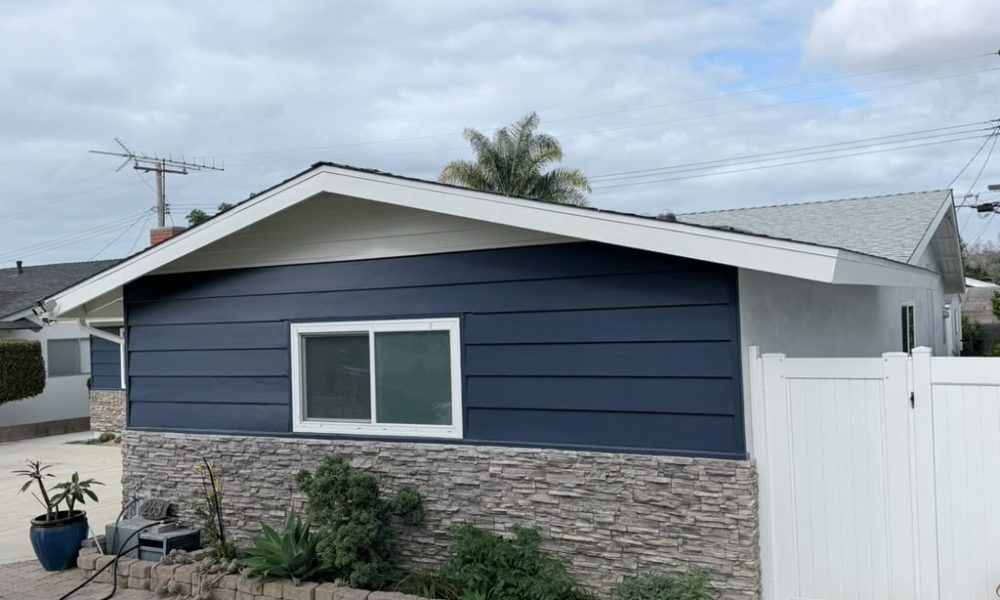
When homeowners plan an exterior repaint, they focus almost entirely on the surfaces that are getting painted — the walls, trim, fascia, garage door, and sometimes the front door. What often gets overlooked are the fixed elements that won’t be changing: the roof, the stone or brick base, and in many Ventura properties, a vinyl fence along the side or front yard.
Vinyl fences are essentially permanent in their color. Unlike wood, which can be repainted to match whatever direction the exterior goes, vinyl holds its factory color through weather, sun, and years of exposure — and that color is almost always white or off-white. When a vinyl fence sits prominently on the front or side elevation of a home, it becomes part of the exterior composition whether the homeowner accounts for it or not. A paint scheme developed without considering it can end up looking disconnected from an element that’s visible from the street every day.
The good news is that white vinyl is one of the most accommodating fixed elements an exterior can have. Knowing how to work with it — rather than around it — opens up the palette rather than limiting it.
White Vinyl as an Anchor, Not a Constraint
The instinct when working around a fixed element is to treat it as a constraint — something to accommodate or minimize. With a white vinyl fence, the better approach is to treat it as an anchor: a fixed reference point that the rest of the palette can build from.
White is the most neutral value in any exterior palette. It provides contrast against virtually every color, it doesn’t compete with primary body or accent colors, and it reads consistently under the range of lighting conditions that coastal California produces — morning marine layer, midday sun, and late afternoon golden light. A white vinyl fence along the side elevation of a home with dark siding reads as a clean visual boundary that defines the property line without pulling attention away from the facade itself.
This is different from a fixed element like natural stone or brick, which carries its own undertones that have to be matched or complemented in the palette. White is genuinely neutral — it anchors without imposing a direction.
How Fence Placement Affects the Color Decision
Where the vinyl fence sits relative to the home’s primary facade determines how much influence it has on the color scheme.
A fence that runs along the side yard and is visible only from an angle — not directly from the street — has relatively little impact on the front facade composition. In this position, it functions more as a background element, and the color scheme can be developed primarily around the front facade without much concern for the fence.
A fence that turns a corner and runs along the front property line, or that sits directly adjacent to the main facade, is much more involved in the overall composition. From the street, the eye moves across the facade and the fence simultaneously, and the two elements need to read as belonging to the same scheme — not as separate design decisions that happen to occupy the same property.
For homes where the fence is prominent from the street, the palette decision essentially starts with the fence: white is on the palette, it’s not going away, and every other color choice happens in relation to it.
Color Combinations That Work With a White Vinyl Fence
White vinyl is compatible with a wide range of exterior color directions, but some combinations make better use of it than others.
- Dark body colors with white trim. This is one of the strongest combinations for homes with a white vinyl fence. Navy, dark slate, deep charcoal, or forest green on the primary siding surface creates a high-contrast relationship with the white fence that reads as clean and intentional from the street. The fence and the trim speak the same language — both white, both providing definition against the dark body — and the overall composition holds together without extra effort.
- Medium-toned body colors with white trim. Warm grays, greiges, and soft blues in the mid-value range also work well alongside white vinyl. The contrast is lower than with a dark body color, but the relationship is still clear: medium body, white boundary. This combination is softer and more approachable than a dark-body scheme, and it tends to blend well in neighborhoods with mixed exterior styles.
- Light body colors. When the primary body color is also light — soft whites, pale creams, or very light grays — the white vinyl fence and the home’s walls start to merge visually. The fence loses its function as a boundary element and the overall composition can look flat from the street. If the body color is going to be light, adding contrast through a darker trim, a bold front door color, or an accent panel gives the composition the definition it needs.
- Colors to approach carefully. Warm earth tones — terracotta, peach, tan — can create a jarring relationship with a cool white vinyl fence, because the warm body and the cool white don’t naturally belong to the same palette. Matching the trim color to the fence (both white or both off-white) helps bridge the gap, but the combination requires more care than a cooler or darker body color.
The Trim Connection: Tying Fence and Facade Together
The most direct way to make a white vinyl fence feel like part of the exterior scheme rather than a separate element is to use a matching or closely related white on the home’s trim — fascia, soffits, window frames, and garage door surround.
When the fence and the trim are the same white, they read as belonging to the same family. The fence becomes an extension of the home’s trim language rather than an unrelated fixture, and the overall composition gains cohesion. This approach works regardless of what body color is chosen, because white trim is universally compatible.
The shade of white matters more than most homeowners expect. Vinyl fence white tends to be a cool, bright white — and trim painted in a warm cream or ivory next to it can read as dingy by comparison. Before committing to a trim color, hold a paint chip against the actual fence in daylight. If the paint reads significantly warmer or cooler than the vinyl, a closer match will give a cleaner result.
Front Door Color Relative to the Fence
The front door is often the one element in an exterior scheme that carries a truly bold color — and its relationship to a white vinyl fence is worth thinking through deliberately.
A bold door color against a dark or medium body reads as the focal point of the facade. The white fence, if positioned adjacent to or visible from the entry, provides a neutral backdrop that lets the door color stand out rather than compete. In this configuration, the fence actually helps the door — it frames the entry zone in white, which makes the door color pop more clearly.
For homes where the fence is directly adjacent to the entry, a door color that’s referenced somewhere else on the exterior — in a planter, a light fixture, or a small accent detail — ties the entry into the overall composition and prevents the door from reading as isolated.
What Doesn’t Work: Ignoring the Fence Entirely
The most common mistake in exterior color planning around a vinyl fence is simply not accounting for it — choosing body and trim colors in isolation and assuming the fence will work itself out.
The result is usually a palette that looks fine in a paint store consultation or on a color rendering, but that reads as disconnected in person because one of the most visible elements on the property isn’t speaking the same language as the rest of the facade. The fence and the house look like they belong to different properties.
Accounting for the fence doesn’t require designing the entire exterior around it — white is accommodating enough that it doesn’t demand that. It does require holding paint samples against the actual fence in actual light before making final color decisions, and checking that the trim color reads as a deliberate match rather than a near-miss.
Ready to Plan an Exterior Palette That Works With Everything on Your Property?
Working with fixed elements like a vinyl fence is part of what separates a color consultation that holds together from one that leaves things to chance. At RM Empire Painting, we plan exterior palettes around everything on the property — not just the surfaces being painted — so the finished result is cohesive from every angle.
Ready to plan your exterior color scheme?
Contact RM Empire Painting for a free estimate and an honest evaluation of your options.
Our Services
Get A Free Quotes
Got any questions ? Feel free to call us !
Do you have any questions about our services or would you like to request a free estimate? Don’t hesitate to call us at (805) 746-5140. At RM Empire Painting we are always available to provide you with personalized advice and help you transform your spaces with the quality we are known for. Contact us today, we’ll be happy to assist you!

Whether you’re looking to refresh your home or enhance your business, our team of licensed and insured professionals is here to deliver exceptional results.
Our Services
Copyright ©2026 RM Empire Painting, All rights reserved. Powered by Orbis Advisers.