White Exterior Paint for Coastal Homes: Best Products for Salt Air and UV
Home / Blog
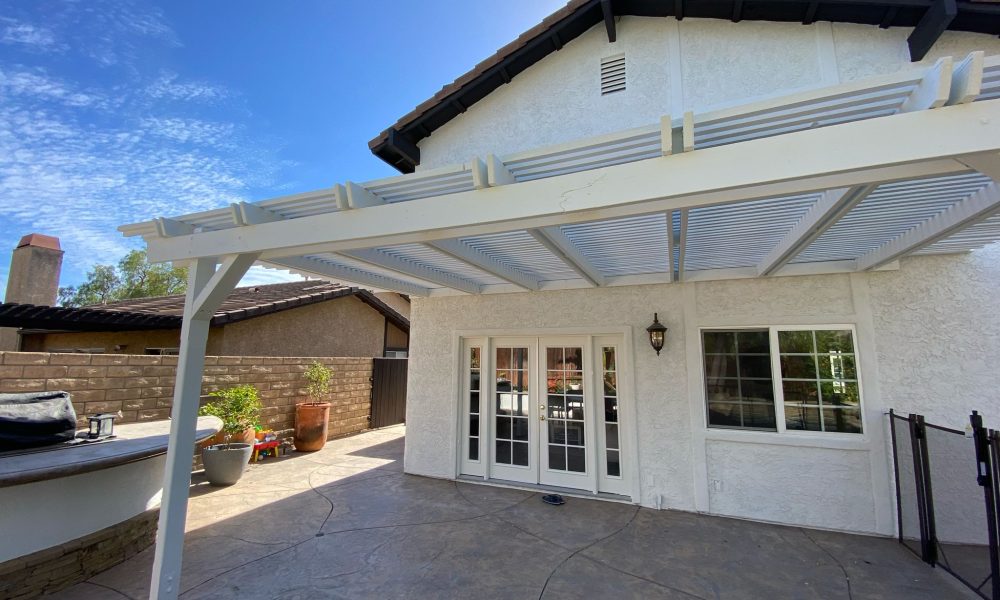
White is the most popular exterior paint color in coastal California — and also the most demanding to maintain. It shows dirt, mildew, and UV fading more clearly than any other color, and in a salt air environment like Ventura, the conditions that degrade exterior paint are present year-round. Choosing the wrong product for a white exterior in a coastal setting means repainting sooner, dealing with yellowing or chalking that looks worse than a darker color would, and spending more over time to maintain the clean appearance that white is supposed to deliver.
The right product makes the difference between a white exterior that holds its brightness for seven to ten years and one that starts looking dingy by year three. Understanding what to look for — and what to avoid — is the first step toward getting that return on a coastal paint job.
Why Coastal Conditions Are Harder on White Paint
Salt air is the defining environmental factor for homes within a few miles of the Ventura coastline, and its effects on exterior paint are more aggressive than most homeowners expect.
Airborne salt particles settle on painted surfaces continuously and attract moisture from the marine layer, keeping the paint film in a state of low-level dampness even when it hasn’t rained. Over time, this accelerates the breakdown of the paint binder — the component that holds the pigment and keeps the film adhered to the substrate. On white paint specifically, binder breakdown shows up as chalking: the powdery surface residue that makes a once-bright white look dull and flat. It also creates the conditions for mildew growth, which on a white surface is immediately visible as gray or black streaking.
UV exposure compounds the problem. Ventura receives over 280 sunny days per year, and white paint — which reflects rather than absorbs light — is under constant UV bombardment on all sun-facing surfaces. UV breaks down the paint binder and causes the pigment to shift, which on white paint means yellowing over time rather than even fading. A white exterior that starts yellowing reads as aged and neglected in a way that a gray or blue exterior fading to a lighter version of itself simply doesn’t.
What to Look for in a White Exterior Paint for Coastal Use
Not every exterior paint performs equally in coastal conditions. The following characteristics separate products that hold up from ones that don’t.
100% acrylic resin. The resin is the backbone of the paint — it determines flexibility, adhesion, and weather resistance. 100% acrylic resins outperform vinyl-acrylic blends (sometimes labeled “latex” without further specification) in every metric that matters for coastal use: they remain flexible through temperature cycles, resist moisture better, and maintain adhesion longer under salt air exposure. Any exterior paint described as “vinyl acrylic” or simply “latex” without specifying 100% acrylic should be treated with caution for coastal applications.
High solids content. Solids are what remain on the wall after the paint dries — pigment, binder, and any additives. Higher solids content means a thicker, denser paint film that provides better barrier protection against moisture and salt. Premium exterior paints typically have solids content in the 40–50% range by volume; budget paints often fall below 35%. The thicker film also covers surface imperfections more effectively and holds color longer.
UV inhibitors. UV inhibitors are additives that absorb or reflect ultraviolet radiation before it reaches and breaks down the paint binder. In a high-UV environment like coastal Southern California, a paint without UV inhibitors will chalk and degrade significantly faster than one formulated with them. Most premium exterior paints include UV inhibitors; they’re typically noted in product literature as “UV resistance” or “fade resistance.”
Mildew-resistant additives. Mildewcide additives built into the paint formulation prevent mildew spores from establishing on the film surface. In a coastal environment with persistent marine layer moisture, mildewcide is not optional — it’s the difference between a white exterior that stays clean and one that develops streaking within a few seasons. Note that mildewcides in paint are a preventive measure, not a treatment for existing mildew; active mildew must be killed and removed before painting.
Dirt-resistance or self-cleaning properties. Some premium exterior paints include formulations that resist dirt adhesion or release accumulated dirt more readily when it rains. On a white exterior in a coastal environment where salt and particulate matter are settling constantly, this characteristic has a direct impact on how long the paint looks fresh between repaints.
Sheen Selection for White Coastal Exteriors
Sheen level affects both the appearance of a white exterior and how it performs in coastal conditions.
Flat and matte sheens hide surface texture variations and imperfections well, which makes them a common choice for stucco surfaces. The tradeoff is that flat finishes are more difficult to clean and provide less moisture resistance than higher sheens — two meaningful disadvantages in a coastal environment. On large, smooth stucco walls where the texture is consistent and even, flat can work with a quality product. On surfaces with any irregularity, flat can look acceptable but requires more maintenance.
Satin sheen is the most balanced option for coastal white exteriors. It provides measurably better moisture resistance and washability than flat, reflects enough light to give white its characteristic brightness, and doesn’t draw attention to surface imperfections the way higher sheens do. For most coastal stucco and siding applications, satin is the sheen that delivers the best combination of appearance and durability.
Semi-gloss is appropriate for trim, fascia, window frames, and garage doors — surfaces where durability and cleanability are priorities and where the higher reflectivity reads as intentional rather than as highlighting texture inconsistencies. Using semi-gloss on large wall surfaces tends to make stucco imperfections very visible, so it’s typically reserved for accent and trim elements.
Surface Preparation: Where Coastal Paint Performance Starts
No paint product, regardless of quality, performs well over a compromised surface. In a coastal environment, surface preparation for a white exterior has a few requirements that don’t apply with the same urgency in less demanding climates.
Mildew treatment before washing. Any active mildew growth on the existing surface needs to be treated with a diluted bleach solution and allowed to kill before pressure washing. Washing over active mildew disperses spores across the surface rather than removing them, which means mildew returns faster under the new paint.
Thorough pressure washing. Salt deposits, oxidized paint chalking, and accumulated particulate matter need to be fully removed before new paint is applied. In coastal environments, salt residue is particularly important to address — painting over it traps salt beneath the film, which draws moisture and accelerates adhesion failure from behind.
Crack repair and caulking. Any cracks in stucco or gaps at material transitions need to be addressed before painting. In a coastal environment, moisture infiltration through unrepaired cracks is a primary cause of paint failure — the moisture migrates behind the film and causes peeling from the substrate outward. Quality exterior caulk at all joints, windows, and transitions is as important as the paint itself.
Primer on bare substrate. Any areas where the existing paint has been removed to bare stucco or wood need a dedicated primer before topcoat. Bare stucco is highly alkaline and can cause adhesion failure or sheen inconsistency without a primer formulated for masonry. On wood, bare grain and end grain sections need a wood primer before the topcoat goes on.
How Often Should a White Coastal Exterior Be Repainted?
With quality products and proper preparation, a white exterior on a coastal Ventura home should hold its appearance for seven to ten years before a full repaint is warranted. Homes within half a mile of the waterfront — where salt air concentration is highest — tend to be at the lower end of that range, and may benefit from a maintenance wash and touch-up inspection at the five-year mark.
The reliable indicators that a white exterior is approaching the end of its paint cycle: visible chalking when you run your hand along the wall, yellowing on south and west-facing surfaces, mildew that returns quickly after cleaning, or paint that has begun to check or crack along the surface. Any of these signals that the paint film has degraded to the point where a new coat is the more cost-effective path forward.
Ready to Repaint Your Coastal Home’s Exterior?
Choosing the right paint product for a white exterior in Ventura’s coastal environment is as important as the color itself — the wrong product in the right color still fails ahead of schedule. At RM Empire Painting, we specify products matched to coastal conditions and prepare surfaces correctly before any paint goes on, so the investment in a white exterior holds up the way it should.
Ready to get a white exterior that stays bright? Contact RM Empire Painting for a free estimate in Ventura, CA.
Our Services
Get A Free Quotes
Got any questions ? Feel free to call us !
Do you have any questions about our services or would you like to request a free estimate? Don’t hesitate to call us at (805) 746-5140. At RM Empire Painting we are always available to provide you with personalized advice and help you transform your spaces with the quality we are known for. Contact us today, we’ll be happy to assist you!
Whether you’re looking to refresh your home or enhance your business, our team of licensed and insured professionals is here to deliver exceptional results.
Our Services
Copyright ©2026 RM Empire Painting, All rights reserved. Powered by Orbis Advisers.